Honor + Curiosity + Bravery
Warriors + Food
war·ri·or/ˈwôrēər/ Noun: (especially in former times) a brave or experienced soldier or fighter.
food/fo͞od/ Noun: any nutritious substance that people or animals eat or drink or that plants absorb in order to maintain life and growth.
In this blog, we hope to encourage the honorable consumption of the Earth’s wildly varietal foods, through courageous and disciplined appreciation of both local and global sources and cuisines. To us, Life and Growth come not only through nutritional value, but through the curious investigation of the most nuanced and experimental dishes, and the soulful gluttony of home-grown and heart-warming comfort foods. We will share our experiences and prompt the wanderlust in you. Taste buds will be yearning.
Warriors fight. Here, we fight for, we fight with, we fight because of, we fight to understand, and we fight in our search for, food.
In this framework, we will discuss sustainability, legendary dishes and chefs, local and regional cuisine, ethical sourcing, crazy new ideas and established traditions. We will tell stories of athletes, dietitians, artists, doctors, mad scientists, gastronomical disasters, restaurant wars, exploding taste buds, quests, Gatsby parties and porridge, ratatouille and rakija, and all the wonderful insanity of the world’s food.
What is Valhalla?
Valhalla/vælˈhælə, vɑːlˈhɑːlə/ Noun: (from Old Norse Valhöll “hall of the slain”) is a majestic, enormous hall located in Asgard, ruled over by the god Odin in Norse mythology.
Valhalla – the origin of our blog – was the haven of Norse warriors in the afterlife. It’s halls provided a space for celebrating the courage of the warriors chosen to sit at the hall’s tables. The original roots (including “hall,” “rock,” “hell,” “slaughter,” “battlefield”) may have referred to an underworld, but I like to focus on the idealized spirit of celebration and reward. A grand hall, occupied by all those who had displayed bravery in combat, served as a space for eternal feasting, camaraderie, and good-nature boasting through weapons practice. Interestingly, food and drink came from an everlasting font of meat and mead. A boar or other creature was said to have been killed and eaten and resurrected each day, and mead consumed in Valhalla is produced from the udders of the goat Heiðrún, which fed on a huge tree near the hall.
In addition, Valhalla has been used as inspiration for many stories and interpretations within Norse and Germanic traditions, including in composer Richard Wagner’s opera cycle Der Ring des Nibelungen. Similar architecture has been used in fictional stories into the modern era as well. Heorot, the central mead hall in the Old English story Beowulf, was similar to our conception of Valhalla, and was eventually used as inspiration for J.R.R. Tolkein’s great hall in the kingdom of Rohan. The name of this “Golden Hall,” Meduseld, was translated from a Rohirric name meaning “mead hall.”
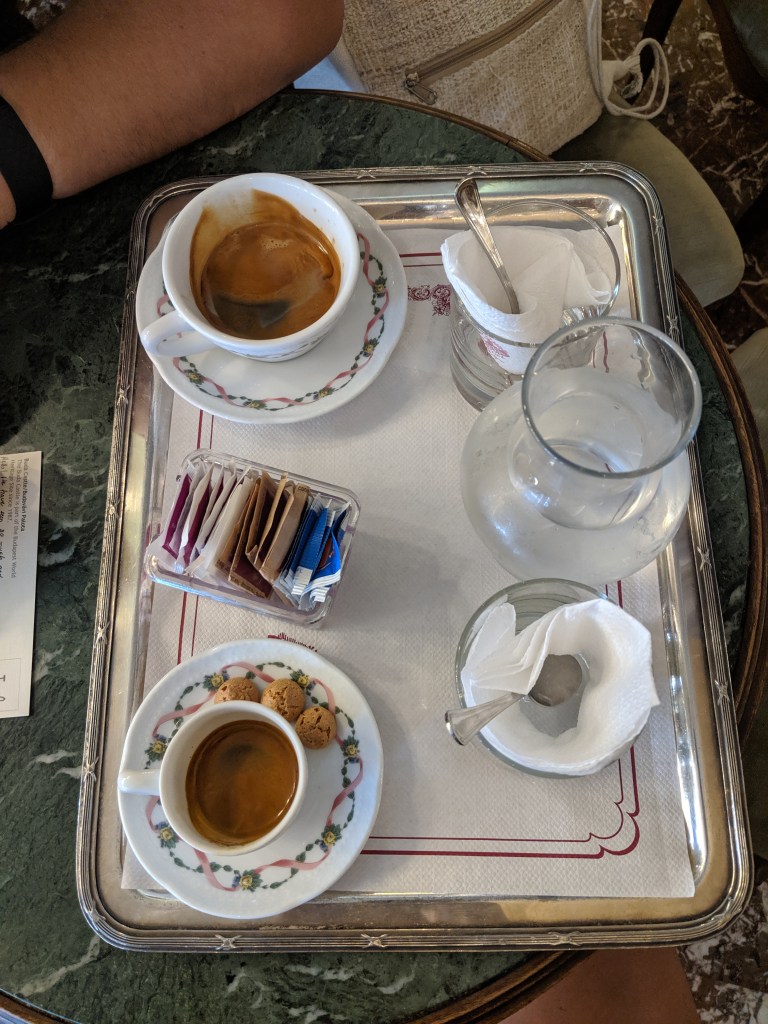
Espresso at Richard Wagner’s house (now the pricy Caffè Lavena) in Venice off of San Marco square. Great atmosphere to people watch, and an interesting historical environment.
There is much popular iconography around Valhalla and Norse and/or Viking mead halls and celebration culture. Much of this “traditional” Norse iconography is misconstrued, as these societies including strong reliance on female authority, largely agrarian and household economies, and eventually an extended cultural reach through maritime trade.
To our blog, “Valhalla’s Table” refers to the many feelings of courage and nostalgia, excitement and hesitancy, food culture and table manners, family, heritage, traditions, and all the many ideas swept into the celebratory environment we imagine when we think about partying with true warriors.
 Valhalla's Table